

How the Panama Canal’s widening has led to SC’s growth

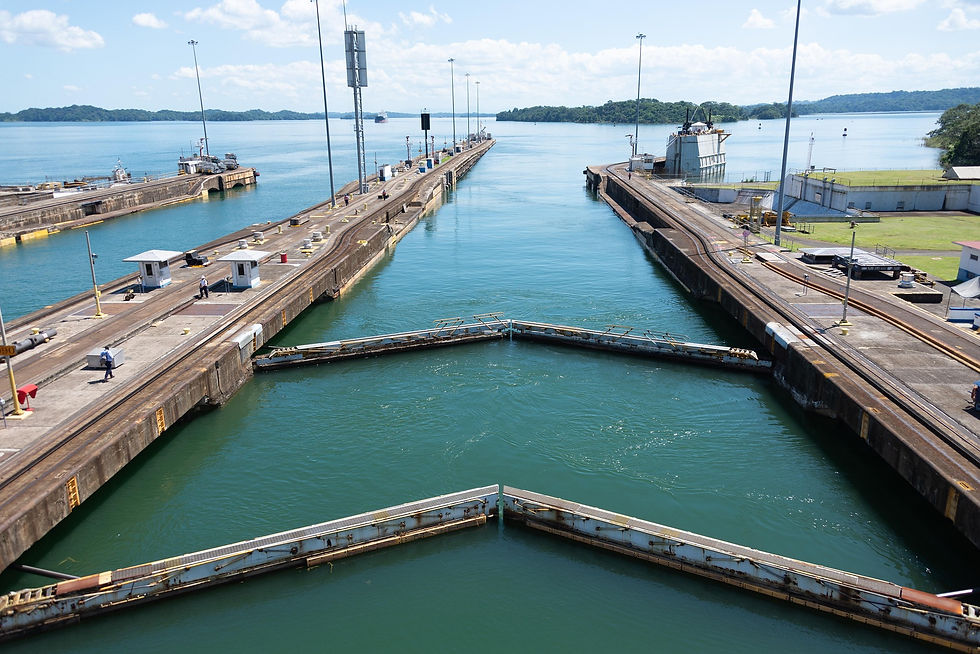
In 2016, the Panama Canal completed a historic expansion, adding a new set of massive locks that allow far larger ships to traverse between the Atlantic and Pacific oceans. The expanded Panama Canal is certainly a feat of engineering, but it’s also a global trade game changer. Half a world away, South Carolina is feeling the effects in a big way.
In this post, we’ll break down how the canal expansion redirected shipping patterns, what it means for East Coast ports like those in South Carolina, and how it’s boosting the local economy.
The Panama Canal Expansion: Bigger Canal, Bigger Ships
The widened Panama Canal opened for business in mid-2016 amid fanfare about a “new era of global trade”. And for good reason: the project built new locks on both the Atlantic and Pacific ends that are 70 feet wider and 18 feet deeper than the old locks, essentially doubling the canal’s capacity.
In fact, the canal authority says it can handle 96% of the world’s container ships now, versus just 70% before, according to DC Velocity. By connecting the Atlantic and Pacific for these larger ships, the expanded canal has made it easier for Asian exporters and U.S. importers to choose an all-water route directly to the U.S. East Coast, rather than routing through West Coast ports and cross-country transport.
The result? A significant shift in international trade patterns that’s benefiting ports like Charleston and Savannah.
Shifting Trade Routes: East Coast Ports vs. West Coast Ports
For decades, ships carrying goods from Asia to the U.S. often unloaded on the West Coast (Los Angeles, Long Beach, etc.), and cargo would trek eastward via trains or trucks.
That made sense when the Panama Canal couldn’t handle the biggest container ships. But since the expansion, East Coast ports have been on the rise.
What’s driving this Eastward shift? It offers ocean carriers a more direct route to the populous U.S. East Coast (2/3rds of the US population is east of the Mississippi river), with the bonus of economies of scale from the larger cargo ships (more containers per voyage means lower cost per container).
Transportation costs play a major role; it can often be cheaper to deliver goods via an East Coast port if customers are located in the Eastern U.S., since rail and trucking across the continent are typically more expensive than water shipping.
Additionally, shippers like having alternatives: the canal expansion has given them new options to avoid bottlenecks or disruptions. The Southeast U.S., in particular, is a hot spot for growth.
By late 2017, Southeastern ports (think Charleston, Savannah, etc.) grabbed a larger share of U.S. imports than they had in years, while California’s share ticked down. Clearly, the Panama Canal’s widening has tilted more of the shipping see-saw toward the East Coast, and South Carolina is one of the prime beneficiaries of that tilt.
South Carolina Ports: Ready for the Big Ships
South Carolina prepared the opportunity and made sure its ports were ready to capitalize on the new trade routes.
The South Carolina Ports Authority (SCPA), which runs major terminals in Charleston and beyond, invested heavily in port infrastructure to accommodate the larger ships coming through the canal.
To handle Neo-Panamax vessels, the Port of Charleston undertook a harbor deepening project (down to 52 feet) so that even fully loaded mega-ships can navigate the channels at any tide.
The port also upgraded its terminals with longer berths and bigger cranes that can reach across vessels carrying 18–20 containers abreast.
South Carolina even raised bridges where necessary and expanded container yards to ensure there’s space for the influx of cargo. All these improvements—deeper water, taller cranes, expanded yards, on-dock rail—paid off.
Ports such as Charleston have attributed increased container traffic directly to ships transiting the expanded canal.
In fact, the SCPA saw a 105% increase in the capacity of ships connecting Asia to Charleston after the canal expansion. This essentially means double the cargo capacity on the Asia-Carolina trade lane, thanks to carriers deploying much bigger vessels via Panama.
And the trend continues: as global carriers launch ever-larger ships, South Carolina’s ports are positioned to remain a key East Coast hub.
Economic Ripples Across South Carolina
The boom in port activity doesn’t stop at the terminal gates—it ripples outward into the broader South Carolina economy. More container ships calling at Charleston means more work for trucking companies, railroads, warehousing, and distribution centers throughout the region.
Much of the growth in East Coast port traffic is tied to where consumers reside. The Southeast (including South Carolina) has seen strong population and industrial growth in recent years, fueling imports.
Companies have been shifting to a regional distribution model, placing warehouses closer to end customers to enable faster delivery (think of how e-commerce has spiked demand for next-day or even same-day shipping).
South Carolina, centrally located in the booming Southeast, is prime real estate for such distribution hubs. The port’s growth has thus attracted new logistics investments—from sprawling import warehouses near Charleston to inland ports in Greer and Dillon that speed goods to upstate manufacturers and consumers.
Crucially, the transportation cost savings of bringing goods through Charleston can entice retailers and importers to build facilities nearby. It’s often cheaper to bring Asian-made products to an East Coast warehouse by ship than to land them in California and then truck/rail them across the country.
By tapping the expanded Panama Canal, shippers cut down on cross-country transit and instead stock goods closer to East Coast population centers. This has meant more jobs and investment in South Carolina—from dockworkers and crane operators at the port, to truck drivers, warehouse staff, and manufacturers receiving parts just-in-time.
Conclusion: Charting a Course for Future Growth
The widening of the Panama Canal has clearly been a catalyst for South Carolina’s recent growth spurt. By allowing larger ships to connect Asia directly with the U.S. East Coast, the expanded canal shifted trade patterns in a way that boosted East Coast and Gulf Coast ports at the expense of some West Coast traffic.
For local business owners and entrepreneurs, this maritime trend opens doors. More ships and cargo coming through Charleston means greater demand for distribution centers, trucking services, and industrial real estate in our communities. Now is the time to get on board with this growth.
If you’re looking to capitalize on the port expansion boom, whether through commercial development, or expanding your operations, consider reaching out to Streams Development.
As experts in South Carolina property development with a keen focus on port-driven growth, Streams Development helps you navigate these opportunities. Contact Streams Development today to chart a course for your business in this exciting tide of port prosperity, and let’s build the future of South Carolina’s economy together.
Do you want to keep exploring similar topics?
Here are three more articles to read next:


Comments